

HUMAN
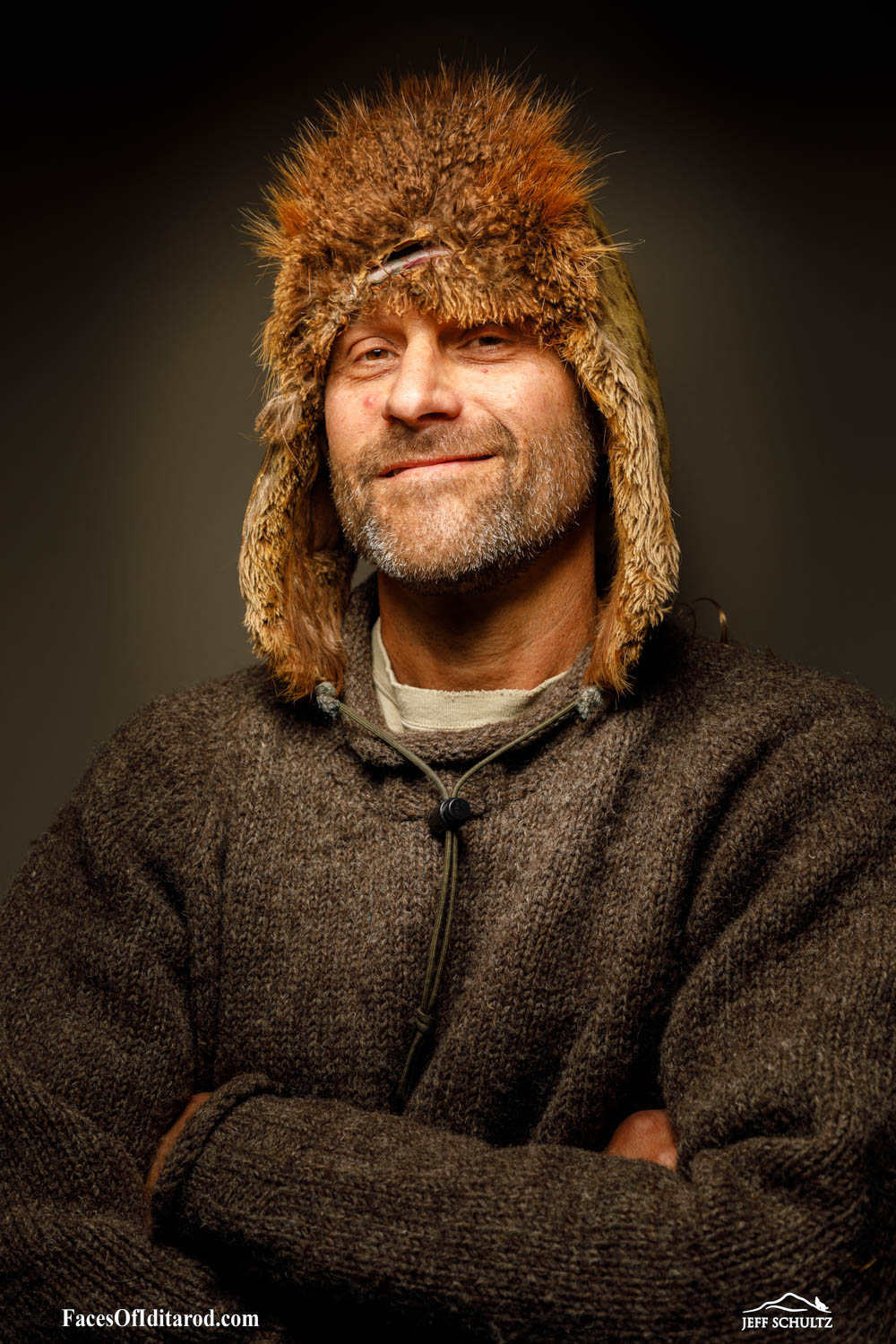
Name: Ron Koczaja
Age: 54
Residence: Fairbanks, Alaska
Occupation: Teacher
First Year Ran Iditarod: 2001
How Many Years Involved With Iditarod: 1
Iditarod Role: Musher
Current Location: Fairbanks, Alaska
Date of Photo: June 21, 2026
Temperature: 68F outdoors
Question 1: What is it about running sled dogs that you love so much?
What I love about running sled dogs is just the lifestyle that goes with it and the bond you make with the dogs, and that whole… Like kind of takes over your life. Just out there with the dogs, traversing across the Alaskan landscape in a very aesthetically pleasing way. And yeah, just all the training of them, training dogs, and just it becomes a full-time thing, and having all the dogs and hanging out in the dog yard, and doing what you have to do to get the dogs food and take care of them.
And I lived out on the YK Delta when it was still legal to subsistence fish for salmon, for dog food, and that was like a big thing. And out training with the dogs, like out in that remote area, in the Bethel area, Kilbuck Mountains, running around in the mountains with those dogs, and hunting caribou, and all that kind of thing. I got into the racing. That was a lot of fun and meeting all the characters out there in the villages on the YK Delta, that kind of blew my mind. I was a young man, and just loved that whole scene.
Eventually came to Fairbanks, and continued just running dogs for fun. And got a dog truck, which to me was like the most amazing thing, and I drove all over up in the Brooks Range. Just to be up in the Brooks Range in April with a bunch of friends camping out in Arctic Ovens and hunting caribou is just… There’s nothing better than that. Just out with your dogs and your friends in the Arctic Mountains when it’s 20 hours of daylight, and still winter, and running around after caribou. That’s a blast. Yeah.
Question 2: What, who or how and when & why did you first get involved running the Iditarod?
So I got involved running the Iditarod. I got hired as a teacher in a village on the YK Delta. And one of the first things that really amazed me out there was some guy running a dog team over the tundra at the Kasigluk Airstrip. It was just kind of a wild thing to see, just this endless tundra, and this airstrip in the middle of nowhere, and some guy getting pulled across the tundra by a big string of dogs. Then, there’s another teacher out there named Andrew Lesh who had run the quest. And he had a bunch of dogs, and I was kind of helping him out a little bit. It really caught my attention as a very worthwhile and interesting thing to get into.
Ironically came to Alaska mainly kind of just for a one-year kind of thing as a teacher in the village. And I was a climber, and there was no climbing out there. One of the things that kind of resulted in me getting dogs was I decided to stay. I liked the job. I liked the village. I liked the people. I liked the lifestyle. I liked everything out there. And I was like, “Well, I’m going to come back and do this for a couple of years, but I’m going to need something to do.” And climbing was not going to be the thing.
And dog mushing, so I got a bunch of dogs from Andrew Lesh and started collecting dogs from other dog mushers. And there’s a big sprint mushing thing out there. And folks, once they found out I was like putting together a dog team, everybody wanted to give me their big male dogs that didn’t fit into the sprint team. So I had this kind of ragtag group of gifted male dogs that no one else wanted. And it was kind of rough at first. Hard to train with a bunch of dogs like that. And yeah, eventually, it’s just one thing led to another and I started.
I ran Bogus Creek 150 and the K 300s, and I was like, “Might as well do the Iditarod.” And there’s another guy in Bethel named Bill Eisenberg who just live in a lifestyle of mushing dogs for fun just to do it. And he raced too pretty successfully, but that guy really inspired me to do things with my dogs even beyond like the racing and just train them to travel, so that you can rely on them in the wilderness. And I would go out training for weeks on end with my wall tent just up in the mountains taking time off for my job as a teacher often. Yeah, eventually came up to Anchorage. So I started Iditarod and I was like, “Yeah, I could do that.” So yeah, 2001, just did that.
Question 3: Tell me about just one of your most memorable Iditarod experiences running the Iditarod.
My most memorable experience running the Iditarod as I was coming into Shageluk, I was feeling pretty down, and dogs were not feeling well. They were sick. And I was feeling kind of depressed. And some folks I met either the year before, a couple of years ago during the Yukon and OKO 200 came out from the village and met me on the trail like 10 miles out of town and just cheered me on. And that really gave me a boost. That was amazing, made me feel pretty darn good. Dogs continued to be pretty slow and sick all up the Yukon.
And then, running up towards Unalakleet, there is a bunch of caribou that just burst out of the willows and the alders, whatever, on the side of the trail and galloped alongside the team and my dogs, which had been trudging along at a three mile an hour pace for days just broke into a lope. And I was in tears and the dogs were just screaming along the trail. And all that caribou hunting I did with them really paid off. Yeah, and they maintained that positive energy that just kind of snapped them out of it.
And later on when we got to Shaktoolik, I just remember lounging in the dog yard down the straw with my dogs and the sun. And there’s snow buntings digging through the straw, looking for seeds and singing. And I’m just laying there in the sun with the dogs and taking a break. And there’s just no place else I would have rather been. That was the best memory.
Question 4: What in life do you know for sure?:
So what I know for sure in life is you just try to give more than you take. And just as far as how you live your life, you just get out there and just get out there into the wild and live like an animal once in a while, and that’ll make you more human.